
Kimberley fire group delivers strong fire outcomes despite one of the toughest late-season periods in years

The Dampier Peninsula Fire Working Group (DPFWG) has reported one of its strongest coordinated fire management efforts to date, despite a challenging late dry season marked by an unusually high number of wildfires.
The group, which brings together Indigenous rangers and partners to restore landscape health through cultural fire practices, met in early November at One Arm Point Community to review the year.
Thanks to extensive early dry season burning by rangers and land managers, the impacts of these late-season fires were significantly reduced. Strategic patterning created natural buffers, helped contain wildfires when they did occur and protected key habitats across the Peninsula.
This season, the group made strong progress against its core objectives for healthy Country:
Fewer high-intensity late-season fires in areas treated with early burning
Improved fire dispersion, providing accessible refuge so animals don’t have to travel long distances to reach unburnt habitat
More long-unburnt areas, supporting mature vegetation and species sensitive to frequent fire
Department of Biodiversity, Conservation and Attractions (DBCA) West Kimberley District Fire Officer Ewan Noakes said the results show the value of coordinated action.
“This has been one of the best years of fire that I’ve seen on the Peninsula,” he said. “The early work made a big difference when conditions turned tough.”
Nyul Nyul Ranger Preston Cox noted that early dry season burning was critical. “Most of our burns were done by aerial burning this year.” he said. “We had outstanding early-dry-season patterning - but it was followed by a hard run of late-season fires. We had to leave Ngumpan Festival early at 5am just to get back to Country to fight the fires.”
Rangers worked long hours under extreme heat. “Our rangers were up at 6am fighting fires and staying out well after dark,” Preston said. “It’s tiring, but the work is critical, especially as hotter temperatures and more fires become the new normal.”
KLC Land and Sea Unit Manager Daniel Oades acknowledged the work of Indigenous rangers throughout the Kimberley in this success.
“Kimberley rangers bring many years of knowledge and expertise to fire and land management. Their work isn’t just about reducing risk, it’s about caring for Country in the right way, using traditional burning to protect biodiversity, culture and community. Often, they are some of the first responders to wildfires in some of the most remote areas in Australia”
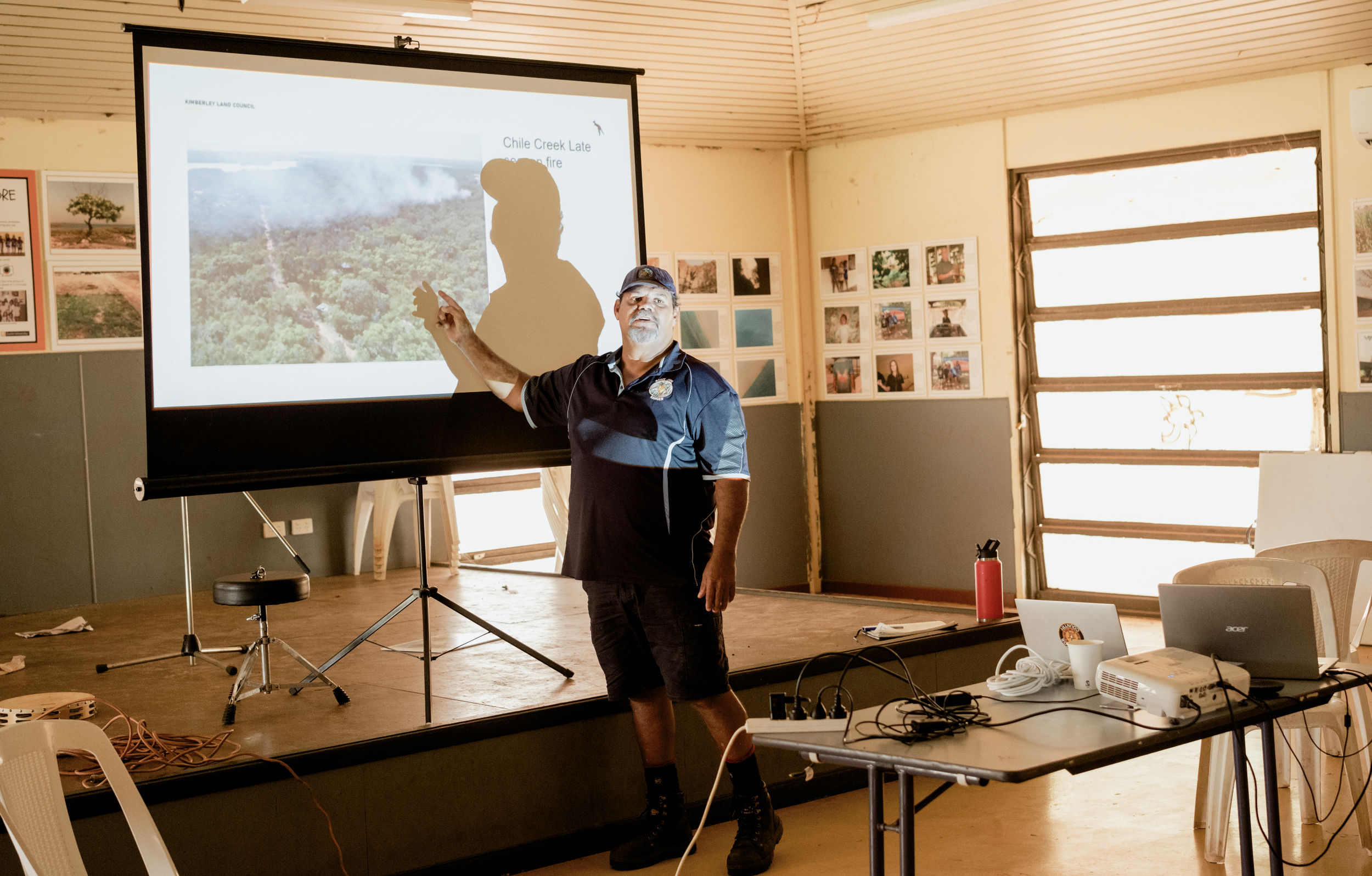
Bardi Jawi Ranger Phillip ‘Bibido’ McCarthy presenting at the forum.
In collaboration with the Department of Fire and Emergency Services (DFES) proved essential throughout the season. DFES also reflected on this year’s lessons, noting that “you can never do enough mitigation” and highlighting ongoing issues around fire misconceptions and under-reporting.
The DPFWG will continue to strengthen community engagement through initiatives like creating educational and operational signage, aimed at improving fire awareness across the Peninsula.
This sustained effort was recognised again this month when the DPFWG was named Runner-Up at the 2025 WA Biodiversity Awards, acknowledging its leadership in collaborative, culturally informed fire management.
KLC Fire Project Officer Azton Howard said the recognition reflects the deep cultural knowledge, long hours and strong partnerships that underpin fire management success on the Dampier Peninsula.
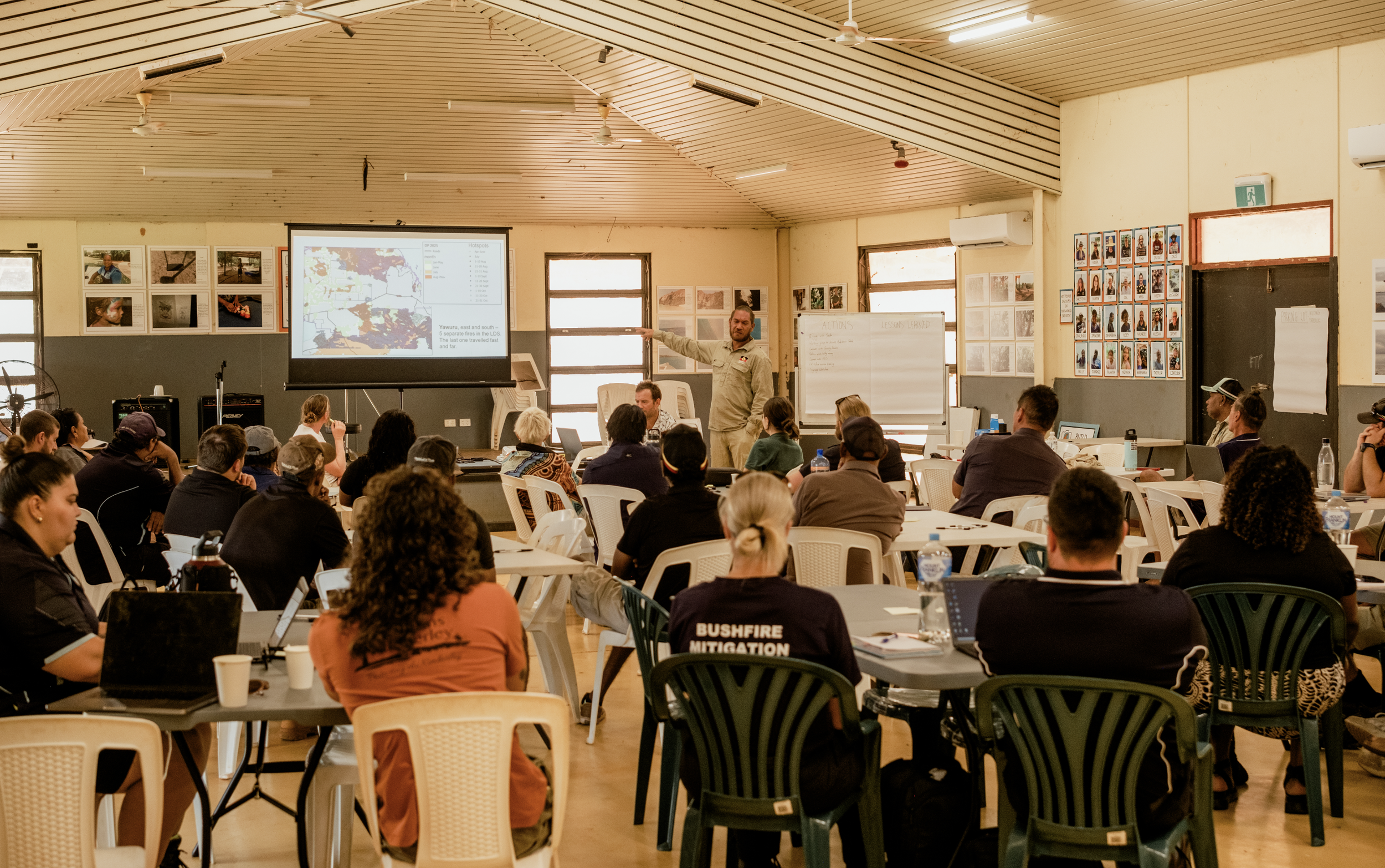
KLC Fire Officer Azton Howard presenting at the forum.
The Dampier Peninsula Fire Working Group, is a collaborative effort between Indigenous ranger groups (Bardi Jawi, Nyul Nyul, and Yawuru), pastoralists and various agencies and organisations including Rangelands NRM (which facilitates the group), the Kimberley Land Council (KLC), Environs Kimberley, the Shire of Broome, and government departments like the Department of Fire and Emergency Services (DFES) and Department of Biodiversity, Conservation and Attractions (DBCA).