
Kimberley Traditional Owners Release Recommendations For Fitzroy-Derby Water Planning

Artwork by Gooniyandi artist Claude Carter (2025). Holy Water. Digitisation of the artwork presented to Minister Punch in October 2025, from Claude Carter on behalf of the Traditional Owner Working Group, depicting the connection of Kimberley Traditional Owners with all Kimberley waters (surface water, groundwater, saltwater, springwater, rainwater).
Water in all its forms is central to life, law, and custom for Kimberley Traditional Owners.
In anticipation of the State Government’s release of the draft Fitzroy–Derby Water Resource Management Plan, the Kimberley Land Council (KLC), on behalf of the Traditional Owner Working Group, is sharing the 61 recommendations presented to the Western Australian Government in October 2025.
These recommendations are the result of an engagement process aimed at fostering understanding and collaboration between Kimberley Traditional Owners and the Department of Water and Environmental Regulation (DWER). This process informed a set of recommendations that reflect Traditional Owners’ concerns, knowledge, interests, and values, and are intended to guide the development of the water plan.
The recommendations were supported by Kimberley Prescribed Body Corporates (PBCs) as a preliminary body of work, at a PBC forum held in Broome in September 2025.
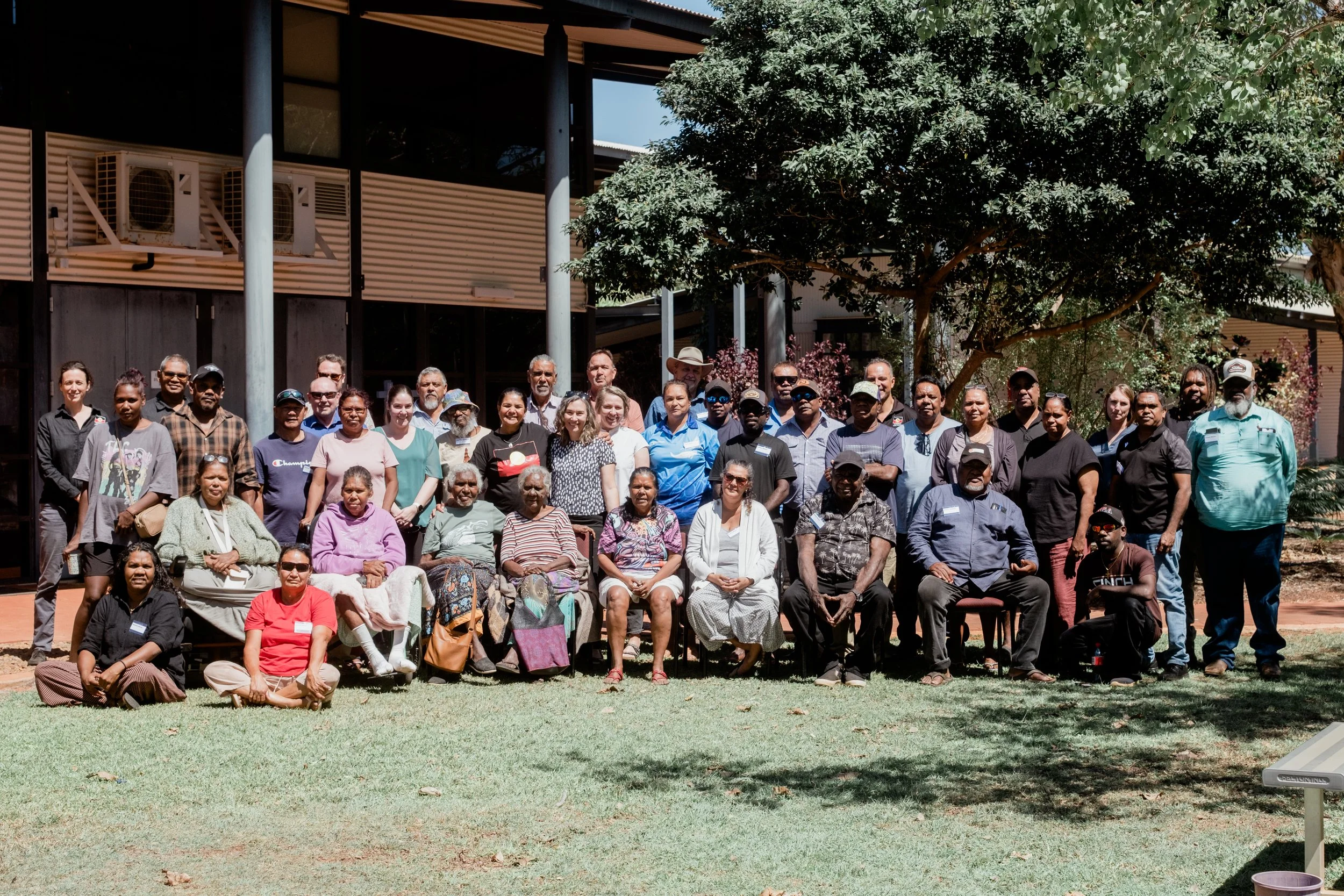
The recommendations were supported by Kimberley Prescribed Body Corporates (PBCs) as a preliminary body of work, at a PBC forum held in Broome in September 2025.
PRIORITY RECOMMENDATIONS FOR PLAN DRAFTING
These are the recommendations from the Working Group and forum attendees that require priority consideration by the government. They address the need to a) increase the level of PBC engagement throughout the planning area and Kimberley and b) consolidate the body of work from the first phase of engagement with the Working Group for inclusion in the final plan.
-
DWER should provide the KLC and Working Group with a copy of the draft plan for review, following DWER’s internal review and before approval by the Minister. The copy of the plan DWER provides should make clear the changes that have been made to the draft plan through DWER’s internal review.
DWER should release the draft plan for public comment for 3 months.
DWER should fund KLC to facilitate a next phase of engagement with Traditional Owners on the Fitzroy-Derby water plan, to enable the KLC to get detailed feedback from PBCs and engage with DWER while the final plan is drafted. This phase of engagement should run from the public release of the draft plan until at least 6 months after the end of the public comment period.
DWER and Traditional Owners, as facilitated by the KLC, should co-write the final plan.
RECOMMENDATIONS FOR INCLUSION IN THE PLAN DOCUMENT
These recommendations are for inclusion in the plan document. Their implementation will require varying degrees of change to the current process.
Some of the technical hydrogeological recommendations in the Licensing and Monitoring sections were developed with support to the Working Group from Hydro Geo Enviro Pty Ltd.
-
The government should create a statutory committee with shared decision-making authority for the plan area that is comprised of at least 50 per cent Traditional Owners, and plays a decision-making role in license assessments.
-
The plan should:
recognise that Traditional Owners are custodians of Country and have been for many generations;
acknowledge and name the native title determinations, registered claims and holders across the planning area; and
acknowledge the many neighbouring native title holding groups who have cultural connections to the water and cultural heritage in the plan area.
The plan should recognise that Traditional Owners have a duty of care for their Country and a responsibility to prevent damage, including ensuring the safety of people on Country.
The plan should recognise that clean drinking water is a human right and is a priority use of water over other purposes.
The plan should recognise that all water in the Kimberley, including groundwater, is culturally significant and underpins the cultural values recognised in the West Kimberley National Heritage Listing.
The plan should acknowledge the scientific uncertainty around Kimberley groundwater resources and the need for a precautionary approach. More specifically, the plan should acknowledge the need for more research to understand aquifer recharge rates, and consider the changing climate, the connectivity within the Canning Basin and between aquifers, and the risks posed by groundwater extraction on Country.
The plan should state that rainwater, runoff and floodplain harvesting for economic purposes is not permitted. Current areas where this is occurring need to be assessed for their impact to cultural values and biodiversity.
The plan should acknowledge that hydraulic fracturing (fracking) can impact aquifers and pollute groundwater resources. The plan should therefore require hydraulic fracturing wells to be monitored and assessed as part of water planning and management, at the proponent’s expense. Traditional Owners should have a right to veto on hydraulic fracturing proposals.
-
The plan should set an allocation limit of no more than 40 per cent of the estimated annual recharge. This recommendation is conditional on:
other Traditional Owner recommendations being adopted; and
a commitment from DWER to review and improve assessments of aquifers hydraulic properties, and estimates of recharge and long-term sustainable yields. This scientific work must consider climate change and the highly variable (both spatial and temporal) cyclonic nature of discharge and recharge in the planning area.
The plan should create an Aboriginal water holding of 50 per cent of the general component: the total water volume for allocation, including water already allocated but excluding water for community use.
-
The plan should state that all water places are to be considered Aboriginal Heritage places for licensing purposes.
The plan should explicitly state that Aboriginal interests, cultural heritage and knowledge of Country are relevant matters in water licence assessments.
The plan should strongly encourage licence applicants to engage with native title parties and any PBC regional body at the project development stage, in order to obtain guidance on how to prevent impacts on Country and culture, and avoid needless investment in projects that may be unsuitable.
DWER should notify relevant native title parties, the KLC and any regional PBC body as soon as a licence application or renewal is received (in addition to the future acts process).
DWER should provide native title parties with sufficient time to respond to future act notices (at least 5 months) and include in the notice a copy of the application and any supporting documents. DWER must also provide a response as to how DWER has considered native title party comments.
Proponents’ impact assessments, monitoring data and other scientific reports should be made available for review by the KLC water unit/team, relevant native title parties and any regional PBC body at the licence application stage, and then annually, as a condition of water licences.
The plan should set out a best-practice consultation process for licence applicants and holders to follow when consulting with Traditional Owners. This consultation process should be developed before the release of the final plan, in partnership with the KLC and Kimberley Traditional Owners.
The plan should provide that the relevant considerations for the purposes of the exercise of the Minister’s discretion in deciding applications includes whether the applicant has:
provided evidence of appropriate consultation as set out in the best-practice consultation process with the affected native title party/ies (noting that this may include neighbouring native title parties, as well as the native title party relevant to the proposed project’s location);
reached agreement with this/those affected native title party/ies on measures to identify and manage impacts on cultural heritage (ideally in accordance with a Heritage Protection Agreement); and
provided confirmation that a cultural heritage impact assessment has been conducted with the native title party/ies and the application is consistent with the outcomes of that assessment.
Consistent with recommendation 3.4.8, DWER should recommend that applicants enter into a Heritage Protection Agreement with Traditional Owners as a pathway to formalise consultation and cultural impact assessment relating to a water licence.
The plan should highlight the risk of contravening the Aboriginal Heritage Act 1972 (WA) and the Environment Protection and Biodiversity Conservation Act 1999 (Cth) through impacts on cultural heritage and National Heritage listed values if proponents do not consult appropriately with Traditional Owners and gain their consent. The plan should state that the relevant considerations as set out in recommendation 3.4.8 will assist an applicant to mitigate this risk.
The plan should state that, because of the Indigenous values associated with groundwater and recognised in the West Kimberley National Heritage listing, DWER may refer all water licence applications to DCCEEW unless the applicant shows evidence of consultation with and consent from the affected Traditional Owners, via their Native Title parties, as set out in recommendation 3.4.8.
Consistent with recommendation 3.4.8, the Minister may not approve applications for water licences that could impact the quantity or quality of water at a site of cultural significance (whether listed or not), unless cleared by Traditional Owners.
Entitlements in individual water licences should be capped at 3 GL, and preferably staged in smaller increments. If DWER receives an application to increase a water licence in excess of 3 GL, it should consult with and seek the advice of the statutory committee with shared decision-making authority for the plan area on matters including:
whether the licence should be capped at 3 GL;
whether approval of the licence should be staged in 3 GL or smaller increments, with 5 years of data collection (with Native Title Party/ies involvement) in between.
Proponents should provide 5 years of baseline data (groundwater levels and water quality) before a licence is granted. Proponents should be required to collect a robust dataset, by which to assess impact, prior to license application as opposed to this occurring after a license is granted to reduce risk.
A schedule of incremental (staged) water licensing should be developed for individual licences to align with monitoring and evidence of no impact. For example, a lack of groundwater connectivity between a drawing point and a groundwater dependent ecosystem or cultural water place should be demonstrated by the applicant, not just assumed.
Licences should be adaptive to climate change. DWER should only allow licence holders to use a proportion of the entitlement during an exceptionally dry year or after a series of consecutive dry years. This should be stated as a condition on licences.
Environmental impact assessments carried out by the applicant must demonstrate the maintenance of hydraulic gradients and groundwater levels at all cultural places as well as in the floodplain, tributaries and alluvium.
Water licences should only be granted if a stygofaunal sampling has been completed and an impact assessment can prove no significant impacts to any identified species are predicted
The alluvial aquifer map and corresponding management zone should extend to the Margaret River and all large creeks.
All water licences should carry a condition that repair is required in the case of damage to Country or water quality.
The adaptive review and renewal cycle for water licences should be shorter than 10 years. We recommend 5 years for the initial licence term, and a physical (not just desktop) review of water licences every 3 years.
Licence renewals that arise once the plan is in place must be assessed against the plan.
-
All licences should have conditions requiring independent water quality monitoring and water quality triggers.
All licences should have conditions requiring groundwater level monitoring which relate to trigger levels and mitigation. There should be a “cease to pump” trigger included for all monitoring bores in all groundwater operating strategies.
Cultural indicators used by Traditional Owners to monitor the impact of the take and use of water on Country and cultural values should be considered equally with ecological indicators.
All monitoring reports (scientific and cultural) should be provided to relevant native title parties on an annual basis.
RECOMMENDATIONS FOR THE PLAN IMPLEMENTATION
These recommendations are about making the recommendations for the plan document actionable, and creating a pathway for efficient and collaborative water decision-making in the Kimberley that aligns with objectives setout in the WA Government’s Aboriginal Empowerment Strategy and the National Agreement on Closing the Gap, to which the WA government is a signatory. They will require government to commit to a continued dialogue beyond the water plan, and to supporting: the capacity building of PBCs and rangers; the creation of mechanisms for Aboriginal water governance in the Kimberley; the implementation of the Aboriginal Water Holding; and the ongoing adaptive management of water licences.
-
The government should durably fund a statutory committee with shared decision-making authority for the plan area that is comprised of at least 50 per cent Traditional Owners, and plays a decision-making role in license assessments.
The government should fund the establishment and operation of a regional PBC body that is involved in water planning, licensing and management. This involvement may include providing advice to the statutory committee, and providing recommendations to the Minister, including on membership of the statutory committee.
The government should fund, consistently and over the long term, technical support for PBCs, the KLC and any PBC body to understand and respond to water licence applications and water planning processes, including technical reports from licence applicants.
The government should contribute ongoing funding to all Kimberley PBCs to support their engagement on state-based future acts, including water licence applications.
-
Traditional Owners must have the right to choose to use the water in the Aboriginal Water Holding or leave it in the system, without penalty or loss of the holding.
To support the creation and implementation of the Aboriginal water holding, the government should provide:
Adequate time and funding for Traditional Owners to explore appropriate governance and management to ensure fair and equitable access;
Adequate funding to implement the holding;
Adequate funding to support Traditional Owners’ access to groundwater.
-
A detailed and explicit adaptive management plan is required to accompany the water plan, in order to clarify how monitoring data and processes will feed into adaptive management of licences. The plan should be developed in collaboration with Traditional Owners.
We would recommend that the following paper is used as a basis for adaptive management planning: Thomann, J.A., Werner, A.D. and Irvine, D.J., 2022. Developing adaptive management guidance for groundwater planning and development. Journal of Environmental Management, 322, p.116052.
-
DWER should undertake more independent and frequent groundwater and Groundwater Dependent Ecosystems monitoring for large water licences, to avoid the reported issues with self-monitoring and data confidentiality.
DWER should enter into a partnership with PBCs to enable Aboriginal PBC staff and/or rangers to be trained and resourced to carry out water monitoring, and possibly compliance activities.
DWER should enter into a partnership with PBCs, to support PBC staff and/or rangers to report compliance incidents or impacts of concern to DWER, and to set out a process for DWER to respond.
Aquifer recharge should be monitored in current time (annually), including via hydrographs, chloride mass balance and preferably other geochemical tracers. Relevant regional-scale assessments of climatic trends and water resources should be taken into account by DWER’s hydrogeologists.
DWER’s monitoring network should be extended to include the upper Martuwarra Fitzroy and Margaret River catchments, where many springs are located.
DWER should create and maintain a water monitoring database (quantity and quality) and make it accessible to PBCs across the plan area.
DWER should support more research to establish an ecological baseline and environmental water requirements in the planning area, especially in the east of the planning area. This should be done with PBC involvement, including of rangers when possible (see recommendations 4.4.2 above).
DWER should expand the groundwater monitoring network to include more monitoring bores in the alluvial aquifer, as well as nested piezometers (sites with multiple bores screened over multiple aquifers or parts of an aquifer). If groundwater allocation is proposed in the east of the planning area, monitoring bores should be installed in this area.
The monitoring of hydraulic fracturing wells as part of water management, to protect groundwater resources, should include well integrity testing ongoing throughout the well’s life (i.e. until decommissioning). Petroleum well integrity/monitoring should be reviewed regularly by Native Title parties, the KLC and any regional PBC body at the proponent's expense. A post decommissioning assessment of the well’s integrity should also be required.
The water plan’s implementation should provide for the establishment of a fund for research, conservation and rehabilitation in the plan area, to assist with developing the body of western and Aboriginal scientific knowledge in relation to groundwater movement and recharge. DWER and/or proponents should provide the required resources for rehabilitation if negative environmental or cultural impacts occur following implementation of the plan.
RECOMMENDATIONS BEYOND THE PLAN
These are recommendations for legislative change and land-use and economic development planning. This vision goes beyond the water plan, but it is has been present throughout the process alongside water planning conversations.
-
The government should replace WA’s water laws with new water laws that incorporate best-practice water planning and management frameworks, recognise Traditional Owner rights in water and require Traditional Owner involvement in planning and decision-making. These new laws should be developed in consultation with key stakeholders, including Traditional Owners.
Until comprehensive reform of WA’s water laws as recommended in (5.1.) above is finalised, the government should amend section 7(2) of Schedule 1 of the RiWI Act to explicitly state that native title rights and interests and cultural heritage are relevant considerations for decisions about water licences.
Until comprehensive reform of WA’s water laws as recommended in (5.1.) above is finalised, the RiWI Act should be amended to provide native title parties with a right of review in the State Administrative Tribunal for licence decisions, including decisions to approve, amend or renew a licence.
-
The Government should deliver on its 2023 commitment of a process to develop a Fitzroy catchment management plan, including land-use and economic development. This plan should be developed in collaboration with Traditional Owners.