The Kimberley Land Council (KLC) has taken a landmark appeal to the High Court of Australia, challenging how State and Territory governments use the expedited procedure under the Native Title Act 1993 (Cth).
The appeal, brought by the KLC alongside its Prescribed Body Corporate (PBC) clients Yanunijarra Aboriginal Corporation RNTBC, Malarngowem Aboriginal Corporation RNTBC and Walalakoo Aboriginal Corporation RNTBC, challenges a Full Federal Court decision that found governments have an “entirely unfettered” discretion to apply the expedited procedure to future acts, including exploration tenements, and that those decisions are not subject to review by the courts.
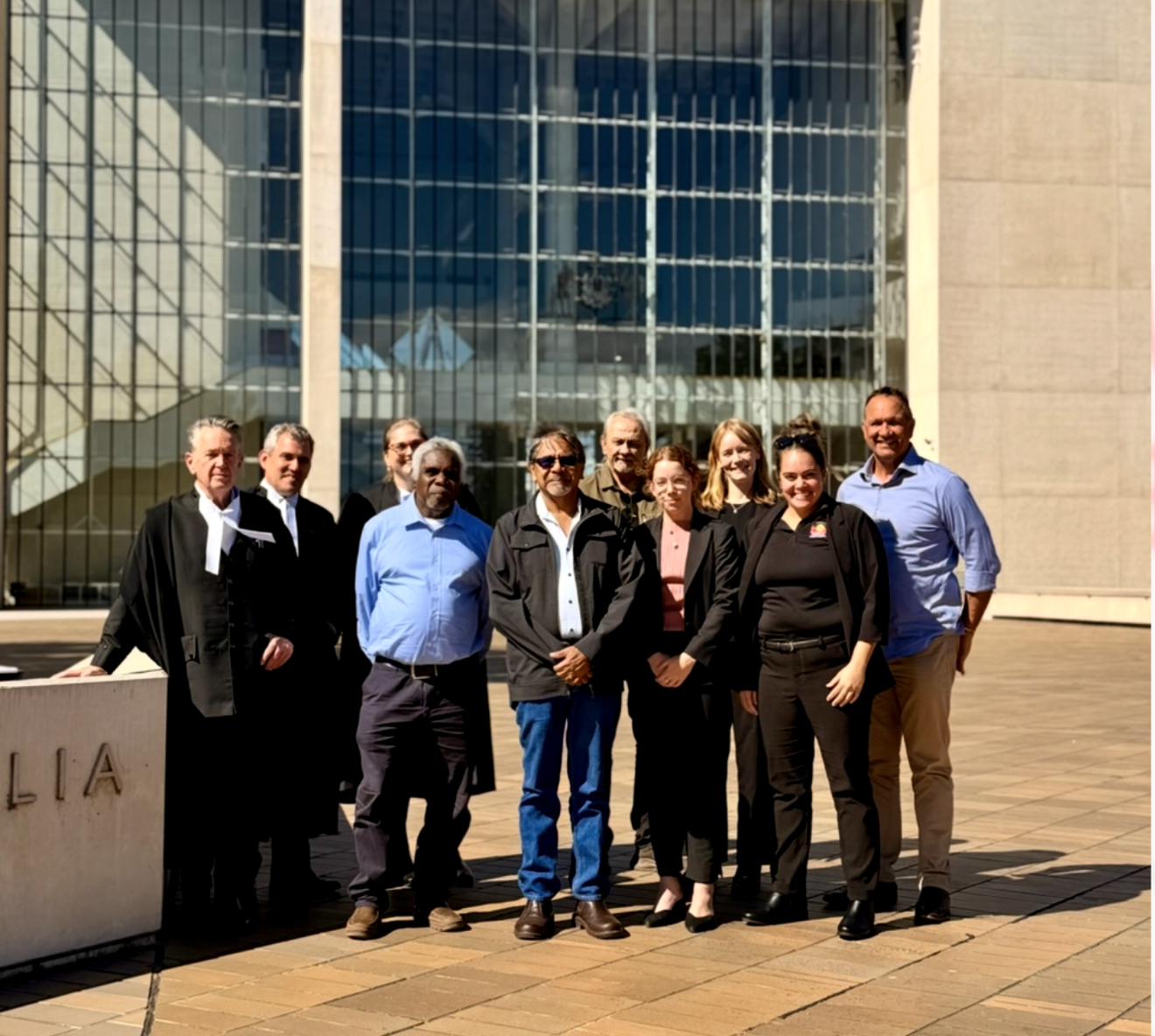
Representing the interests of Kimberley Traditional Owners, KLC staff travelled to Canberra for the appeal, alongside PBC representatives Kim Bridge, Jim Lewis and Gary Clancy.
KLC Acting CEO Sarah Parriman said the appeal was an important opportunity to challenge the limits of government power and protect the rights of Traditional Owners.
"This case is about ensuring governments are accountable for the decisions they make about Aboriginal people’s Country and rights. The Native Title Act must provide meaningful protections for Traditional Owners, and government decisions that affect those rights cannot be beyond legal scrutiny.
"Traditional Owners have fought hard for recognition of their rights and their ongoing role in caring for Country. We have a responsibility to ensure those rights are respected, and that the laws designed to protect them are not undermined by processes that remove their ability to negotiate and have a say in what happens on their Country.
"This appeal is an important step in standing up for the rights of Kimberley Traditional Owners and ensuring those rights are protected for generations to come. Regardless of the outcome, the KLC will continue to pursue every opportunity to defend and strengthen the rights of Traditional Owners, hold governments accountable and ensure their voices are heard in decisions affecting their Country."
Malarngowem Aboriginal Corporation RNTBC Chair Kim Bridge said the case also highlighted the need for a more respectful and practical approach to managing low-impact activities on native title land.
“It is clear that a new approach to low-impact future acts is needed. The current expedited procedure is not working and should be replaced with a respectful, practical and negotiated framework that recognises Traditional Owners as rights holders, not simply stakeholders to be notified about activities on their Country.
“The current system is unnecessarily adversarial. It creates delays for proponents, makes it harder to build meaningful relationships and places significant financial and administrative burdens on Native Title bodies that are forced to object to proposed activities to protect their rights.
“We need a system that works for everyone. Genuine low-impact activities should be able to proceed efficiently where appropriate safeguards and agreed protocols are in place, but that must happen in a way that respects Traditional Owners’ laws, customs, responsibilities and connection to Country.
“Rather than a system built around repeated objections, we should be working towards respectful relationships, negotiated arrangements and shared responsibility for protecting Country.”
The High Court appeal raises fundamental questions about government accountability, the limits of executive power and the legal protections available to Traditional Owners when decisions are made about their Country.
The KLC and the PBCs argued that government decision-making under the Native Title Act must be subject to legal limits and judicial oversight, particularly when those decisions have significant consequences for the rights and interests of native title holders.
At the heart of the case is the expedited procedure, which allows governments to fast-track certain future acts[JT1] , including exploration tenement applications, where the government “considers” that the proposed activities are unlikely to directly interfere with social and community activities of native title holders or areas and sites of particular significance to native title holders, or cause major disturbance to land.
Under the procedure, the right to negotiate is removed, meaning proponents such as mining companies can proceed without having to negotiate with native title holders or reach an agreement with them.
Native title holders do not have a right to veto mining or exploration on their Country. However, the right to negotiate provides an important statutory avenue for Traditional Owners to potentially reach agreement with proponents and have a say in activities that may affect their land, waters, culture and heritage.
The expedited procedure has long been a source of concern for Traditional Owners and their representative bodies because it undermines these important procedural rights and limit opportunities for meaningful consultation and negotiation.
The Australian Law Reform Commission (ALRC) acknowledged these concerns in its Final Report on the Future Acts Regime, recommending the repeal of the expedited procedure. The ALRC found that a majority of stakeholders supported its removal, reflecting broader concerns about the process and its impact on native title holders.
Despite these recommendations, the Australian Government has not yet responded to the recommendations or committed to implementing any of the proposed reforms.
The High Court appeal represents an important opportunity to seek clarity on the legal limits of government decision-making under the Native Title Act and the ability of Traditional Owners and their representative bodies to challenge decisions that affect their rights.
The outcome of this case could have significant implications for native title holders, Prescribed Bodies Corporate and representative bodies across Australia, as well as the broader balance between proponents and the rights of Traditional Owners to protect and make decisions about their Country.